Square shoulder milling challenges: how to improve reliability, surface quality, and tool life
Square shoulder milling is one of the most common milling operations, but it is rarely as simple as it looks.
Creating a clean, precise 90-degree wall, maintaining surface quality, controlling vibration, and keeping tool costs under control all depend on making the right decisions before machining begins shoulder milling.Square shoulder milling is one of the most common milling operations, but it is rarely as simple as it looks.
Creating a clean, precise 90-degree wall, maintaining surface quality, controlling vibration, and keeping tool costs under control all depend on making the right decisions before machining begins.
For machinists, operators, and production engineers, the challenge is not only choosing a square shoulder milling cutter.
It is profoundly understanding the full application: the material, the machine, the component, the tolerance requirements, and the production environment.
This blog looks at common square shoulder milling challenges, and how machinists like you can approach them in a practical way.
First things first: Always start with the material and the machine.
Most square shoulder milling problems begin to rear their heads long before the first cut is made. That’s why the material being machined, and the machine's specific capabilities, should always be the starting point for any tool recommendation.
Different materials place different demands on the cutting edge, geometry, grade, and chip evacuation.
Steel, stainless steel, titanium, cast iron, and aluminium do not behave in the same way.
You can read more about material specificities on this article: Discover the Material groups | Seco Tools
Some generate more heat, some are more prone to burr formation, and others require sharper, more positive geometries to reduce cutting forces. Machine capability is also just as important. Power, torque, spindle speed, rigidity, and achievable RPM will all affect what the tool can do reliably.
A cutter that performs well on a powerful, rigid machine may not be the right choice on a smaller machine with limited torque.
In these cases, a lighter-cutting solution may offer better process security than a more aggressive choice.
Before selecting a square shoulder mill, we encourage you to ask…
- What material is being machined, and why?
- What machine power and torque are available?
- What spindle speed can the machine realistically achieve?
- How rigid is the setup?
- Is the operation roughing, semi-finishing, or finishing?
The answers to these questions will help you narrow down your options, and ultimately, potential machining challenges.
Challenge 1: Chatter and vibration.
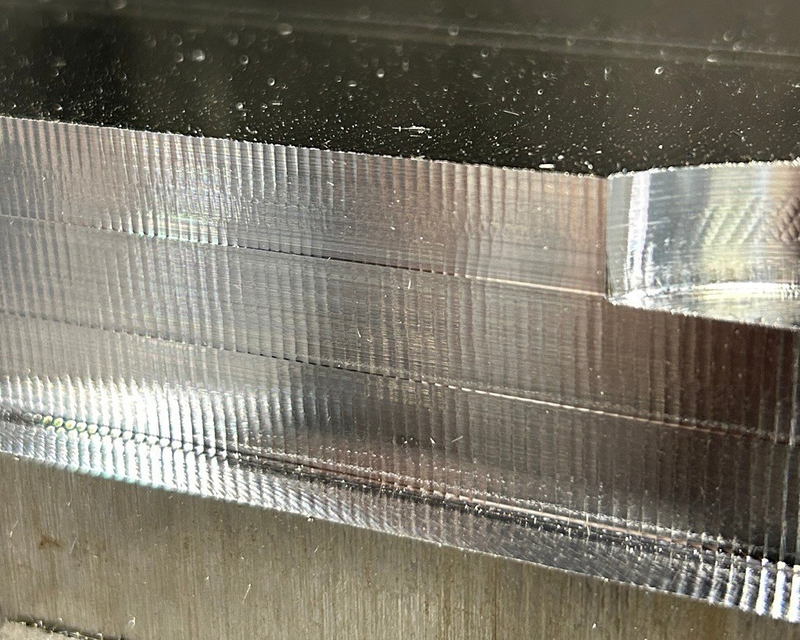
Chatter is one of the most common challenges in square shoulder milling. It can damage surface quality, reduce tool life, create excessive noise, and make the process unreliable.
The cause is often a combination of tool choice, cutting data, overhang, machine stability, and workholding.
Long overhangs, weak setups, and aggressive cutting parameters can all increase vibration. In some applications, the tool may also be generating more cutting force than the machine or setup can comfortably handle.
Reducing chatter typically improves process stability and lowers cutting forces. This can be achieved by using a shorter tool overhang, selecting a more positive cutting geometry, adjusting feed and speed, reducing depth of cut, or choosing a cutter better suited to the machine.
For smaller machines or lighter setups, the most productive solution is not always the most aggressive one. A stable process with predictable tool life will usually outperform an unstable process that has to be stopped, adjusted or reworked.
![]()
Challenge 2: Poor surface quality.
Poor surface quality is typically caused by vibration, but incorrect cutting data, unsuitable geometry, poor chip evacuation, and tool wear can all contribute to this challenge.
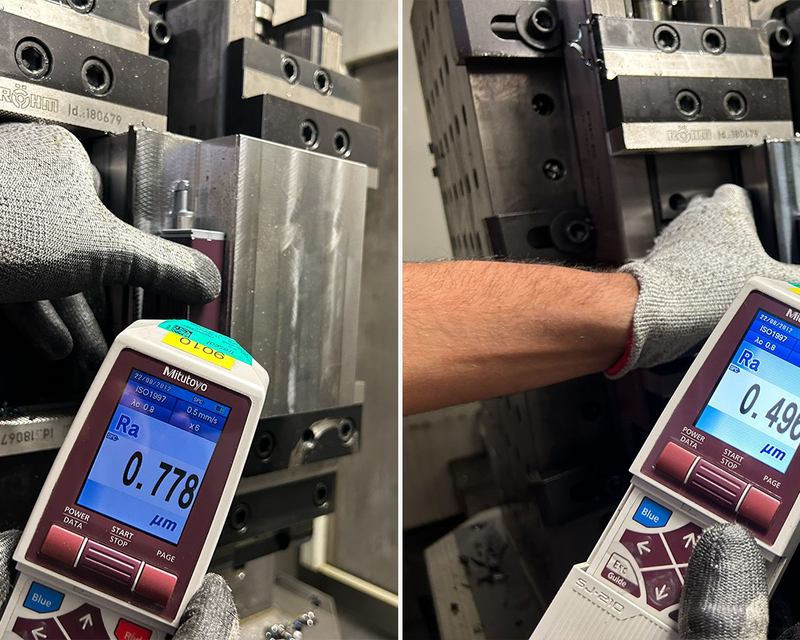
In square shoulder milling, it is especially noticeable because wall quality is often visible and measurable.
The required surface finish should influence tool selection from the beginning.
A roughing operation and a finishing operation have different priorities. For example, roughing may require edge strength and metal removal rates, while finishing may require higher precision, lower cutting forces, and a geometry capable of producing a clean wall.
In some cases, a finishing pass (or spring pass) may help improve wall quality. However, this should be seen as part of the machining strategy, not a substitute for choosing the right tool.
If the tool is not suited to the component tolerance or wall requirements, adding extra passes may actually increase cycle time without solving the underlying issue.
![]()
Challenge 3: Achieving a true 90-degree shoulder.
A “true 90-degree shoulder” is about more than the shape of the cutter.
In practical terms, it means achieving the explicit perpendicularity, straightness, and wall tolerance needed to meet the component drawing.
This becomes especially important when the shoulder is a functional surface, when the wall must meet another component, or when secondary finishing operations would add cost and time.
If the wall is not accurate enough, the customer may face rework, a mismatch between passes, a poor fit, or additional finishing work.
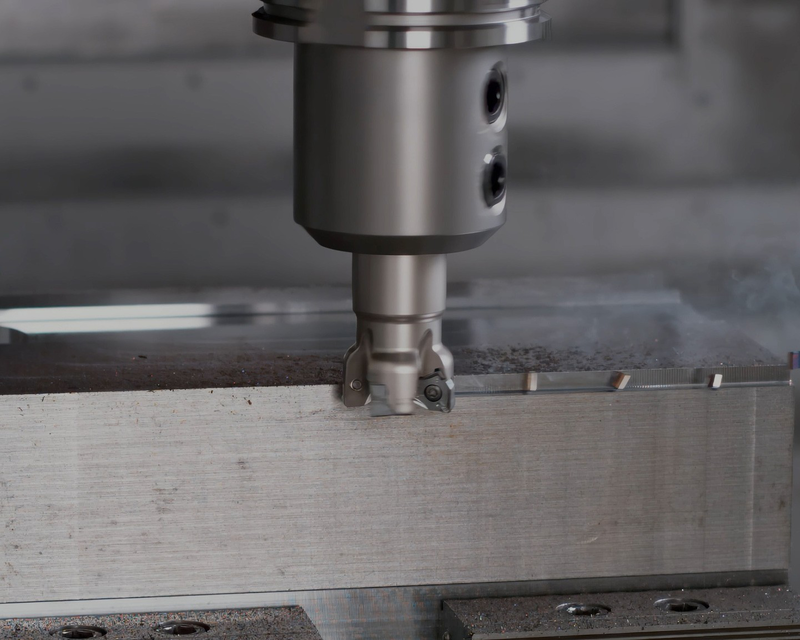
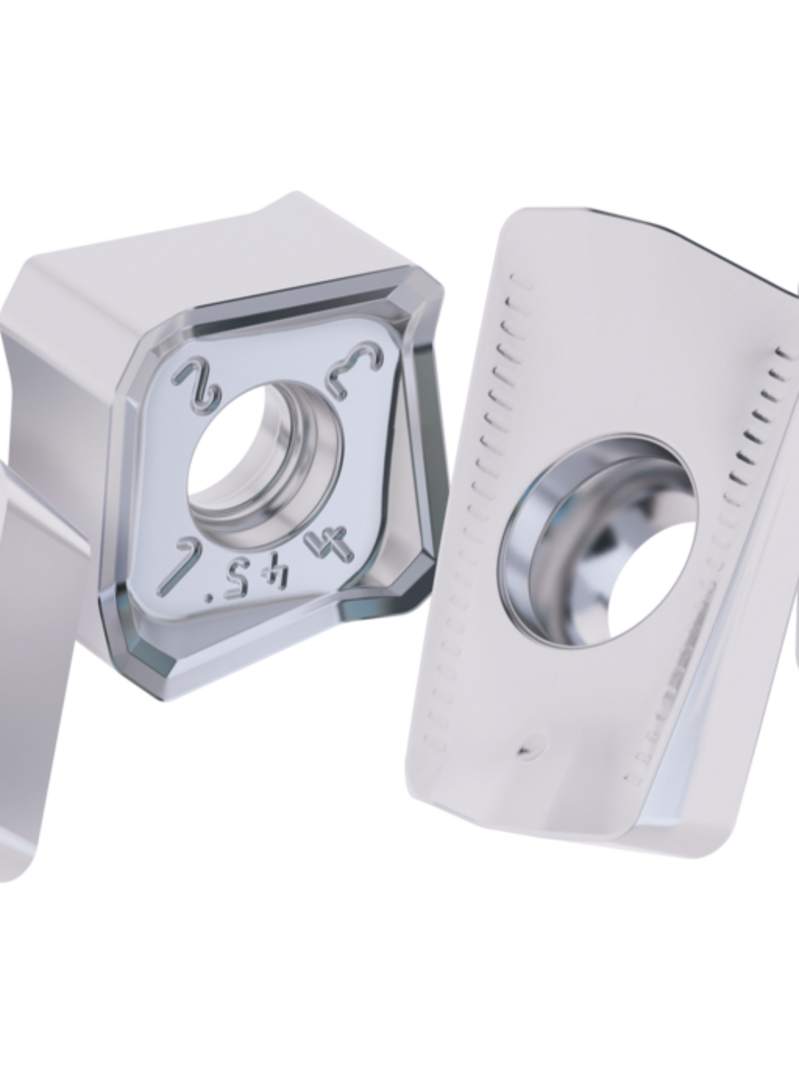
Tool choice really matters here. Solid end mills generally offer higher stiffness at smaller diameters, which can limit tool deflection and support good wall quality. Indexable milling cutters, however, can offer productivity and cost advantages in many applications, especially at larger diameters or where edge economy is important.
Cutting length also matters. If the cutting length is too short and multiple step-down passes are needed, there can be a visible mismatch between passes. Selecting a tool with the right cutting length for the wall height can help significantly reduce this problem.
![]()
Challenge 4: Chip jamming and poor chip evacuation.
Chip control is critical in square shoulder milling. When chips are not evacuated effectively, they can be recut, jammed between the tool and workpiece, or welded to the cutter body. This can damage the insert, affect surface quality and increase heat.
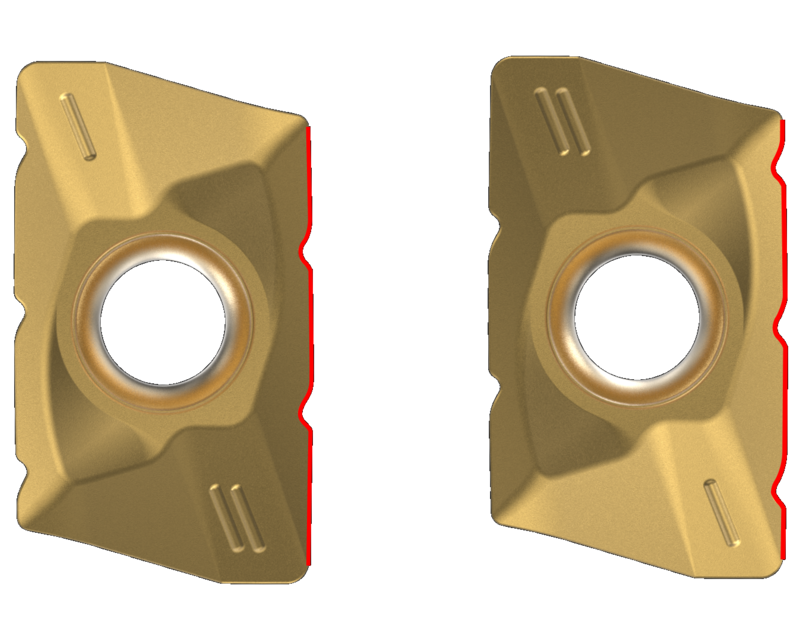
The risk is higher in slotting, pocketing, and other operations where chips have limited space to escape. It also increases in sticky materials, with poor coolant access, and in vertical machines, which are more prone to chip accumulation than horizontal machines.
To improve chip evacuation, consider cutter geometry, coolant strategy, cutting data and the application itself. Integrated through-coolant, positive geometry and appropriate chip space can all help support process reliability. Chip breaker and chipsplitter inserts can also help improve chip control by breaking chips into smaller, more manageable pieces, making evacuation easier and reducing the risk of chip jamming.
The key point is that chip control should not be treated as an afterthought. If the application naturally traps chips, it should influence tool choice from the start.
![]()
Challenge 5: Tool breakage and unpredictable tool life.
Tool breakage can come from excessive cutting forces, vibration, poor setup stability, incorrect grade or geometry, chip jamming, or simply pushing a tool beyond its intended application.
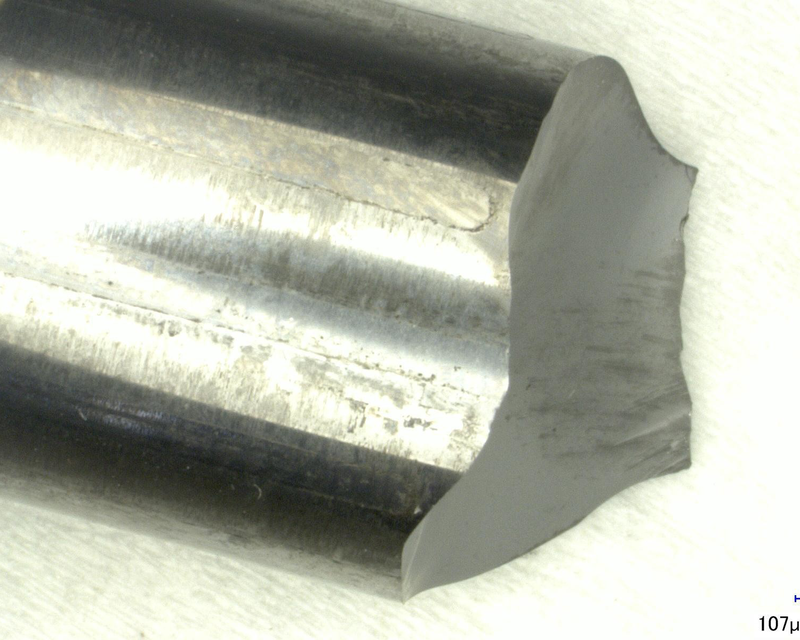
In square shoulder milling, it is important to distinguish between a tool that is technically capable of making the cut, and one that can make it reliably in production. The right choice may depend on batch size, cost per part, available machine time, and the customer’s appetite for process risk.
For some customers, a more economical tool may be the best option. For others, higher process security or higher productivity will be more valuable.
This is where the Core, Plus and Max tooling performance system from Seco can really help for solid end mills: the best solution depends on whether you need a dependable standard option, improved performance, or maximum productivity for a demanding application.
Challenge 6: Choosing only by cost per edge.
Cost per edge is important, but it should not be the only selection criterion.
A low-cost edge that results in poor surface quality, short tool life, or unreliable machining may increase the total cost per component.
A better question is: what is the cost of producing a good part?
This includes tool cost, tool life, cycle time, machine downtime, changeover time, scrap risk, finishing time, and inventory.
In some cases, a double-sided insert can improve cost efficiency. In others, an exchangeable head system can reduce tool inventory and downtime. For finishing or smaller diameters, a solid end mill may be the right choice.
The most economical solution is the one that fits the full application, not just the insert price.
Challenge 7: Selecting the wrong tool type.
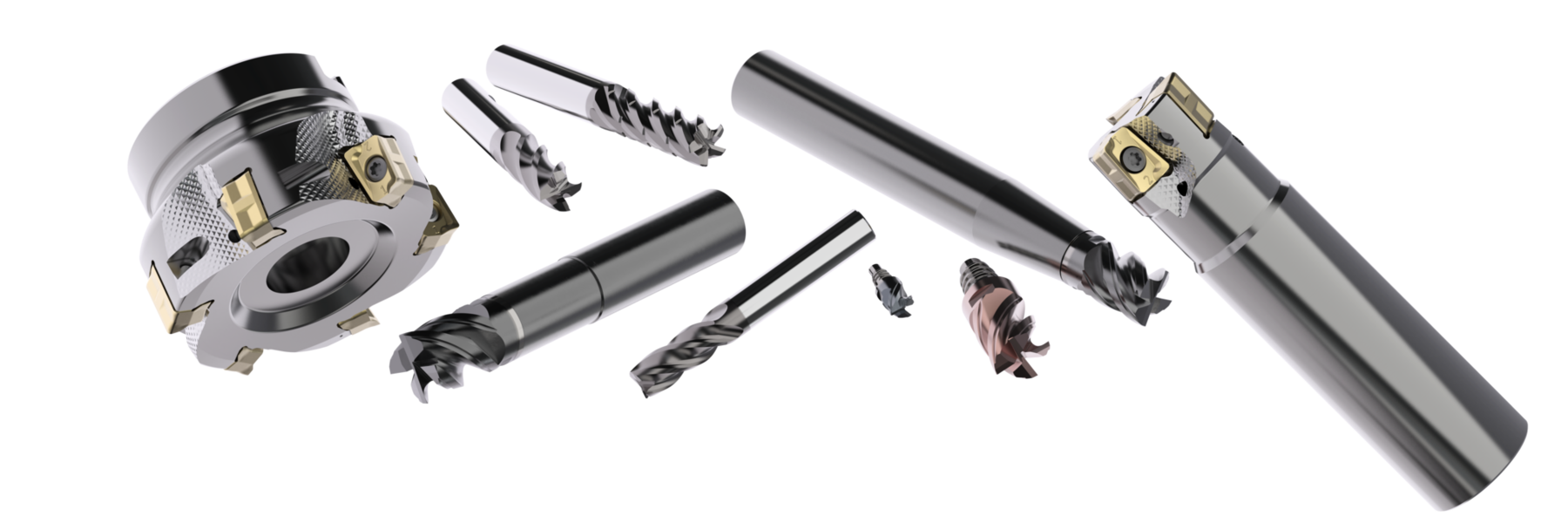
Square shoulder milling tools generally fall into three broad groups: indexable, exchangeable, and solid.
Indexable milling cutters use replaceable inserts. They are often a strong choice for larger diameters and operations where productivity and cost per part are key.
Exchangeable head systems use replaceable cutting heads mounted on reusable shanks. They can be especially useful when flexibility, reduced downtime, leaner inventory, or long overhang options are important.
Solid end mills are made from a single piece of carbide or other high speed steel. They are often used for smaller diameters, finishing, precision features, and applications where wall quality is critical.
The right tooling choice ultimately depends on the component, material, machine, and operation. There is rarely one universal answer.
A practical way to avoid challenges in square shoulder milling.
Before choosing a shoulder mill, we suggest working through the application in this order:
First, identify the material and the machine capability.
Then consider the component geometry, tolerance, and surface requirements.
Next, define the operation: roughing, semi-finishing, or finishing.
After that, review the required diameter, cutting length, depth of cut, and corner radius.
And finally, consider the customer’s priority: economy, productivity, flexibility, surface finish, or process security.
This approach helps avoid over-aggressive tool choices, and supports better optimisation.
In many cases, customers like you have not made a “wrong” choice. The opportunity is simply to improve the tool selection, cutting data, or machining strategy for the specific production requirement in question.
In conclusion.
Square shoulder milling challenges are often interrelated.
- Chatter affects surface quality,
- Poor chip evacuation reduces tool life,
- Machine limitations introduce vibration
- And the tool selection influence on accuracy and consistency between passes.
The most reliable results come from a deep understanding of the full machining situation before choosing the cutter.
By considering material, machine capability, component requirements, application strategy, and production priorities, manufacturers like you can best select a square shoulder milling solution that improves your reliability, quality, and cost efficiency.