GTDA – the path to efficiency
Tool wear analysis can do more than optimize cutting tool selection. It can also increase the efficiency of the whole machining process.
These days, just about every manufacturing operation has heard about Industry 4.0 and understands that it involves aiming for operational excellence and applying modern digitalization techniques in intelligent ways. The accepted wisdom is that to achieve optimal operational excellence businesses need to meet three goals: eliminating or reducing waste; minimizing inflexibility; and minimizing variability.
However, Seco has developed a more complete approach that adds extra elements to the equation. We call it the NEXT STEP production model. This involves being in full control of the machining process, fully understanding the influence of the workpiece materials, and reducing the waste of resources. It also involves employing production economy and first-time yield as effective measuring tools and, last but not least, supporting all of this through a wellfunctioning leadership model. The thinking behind this approach is that the efficiency of any manufacturing plant is limited by any bottlenecks in the manufacturing environment and system. The slowest process dictates the speed of the whole manufacturing process.
Tool wear analysis has traditionally been used for evaluating the functioning of a cutting tool by evaluating wear patterns on used tools. However, Seco realized that there were far broader benefits to be gained. We call this wider use of tool wear data, Global Tool Deterioration Analysis (GTDA).
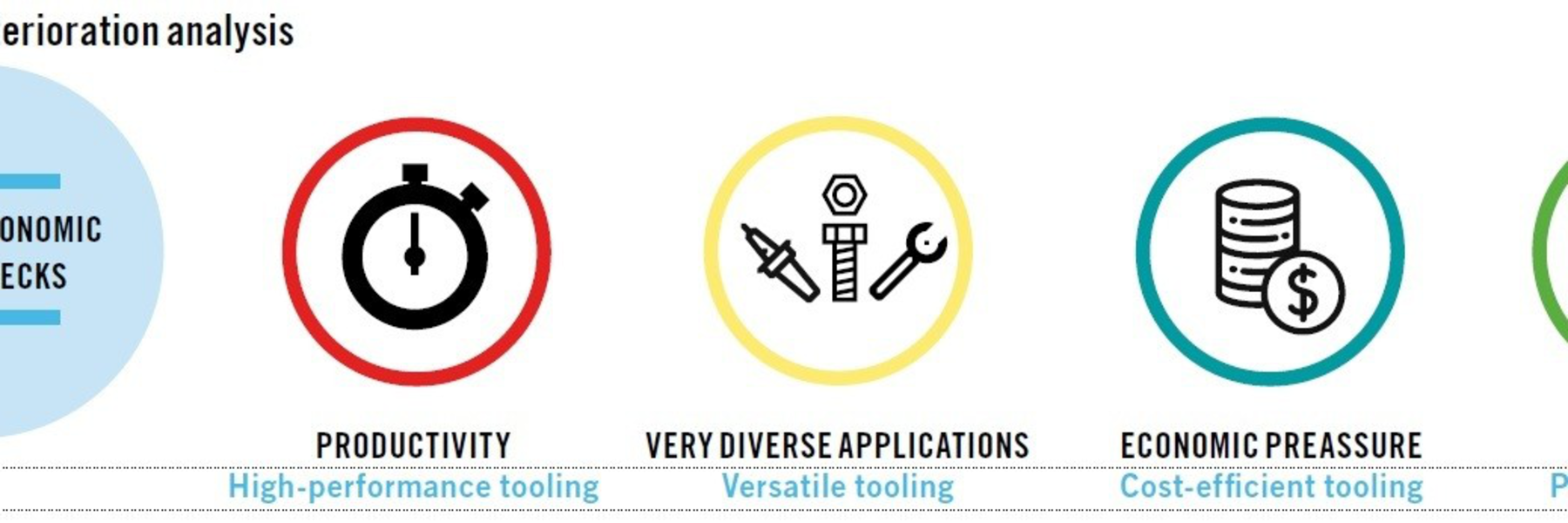
What are the main advantages? Tools cost money and by linking the results of a GTDA to the analyses of variables like cost of goods sold (COGS), we can more exactly quantify the impact of tooling cost on the total costs. Tool manipulation costs time and adding single minute exchange of dies (SMED) analysis to a GTDA will help identify the significance of tool manipulation.
Tool use has a clear impact on the overall equipment effectiveness (OEE) of the plant and on system efficiency. (Value stream mapping – VSM – techniques will reveal how the tools contribute or detract from this.) For example, when system efficiency is low, the optimization of tools will have only an arbitrary effect. But when system efficiency is high, it is critical to ensure that tools function in a very reliable way. In all cases, a tool that is broken or non-functioning will create a major bottleneck with the potential to destroy efficiency.
Seco’s GTDA helps determine the real and total impact of cutting tools on the total manufacturing system. The results form the basis of simulations that help determine how various actions would influence the different technical and economical KPIs of the manufacturing plant. A GTDA is concluded by providing an overview of strengths, possibilities for improvement, and improvement levers. And, of course, a proposal for concrete actions to implement.

“ A GTDA is concluded by providing an overview of strengths, possibilities for improvement, and improvement levers.”
Patrick de Vos, STEP Manager at Seco Tools
|